From Logo to Medal: What Sports Event Branding Actually Involves
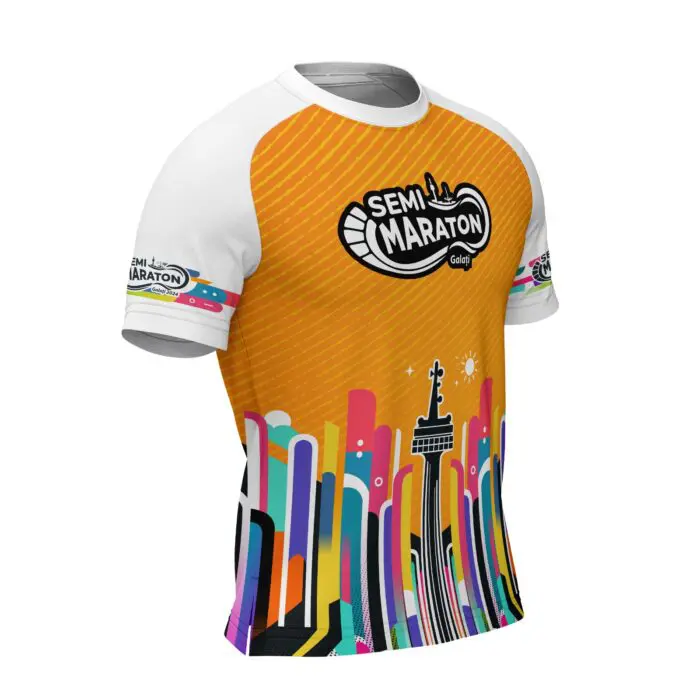
If you organize a recurring sports or community event, you already know the challenge: your branding has to work on an Instagram post, a 20-foot banner, an embossed finisher medal, and an embroidered race shirt — all at the same time. And each edition needs to feel fresh without losing the recognition you built the year before.
At AdQuest, we've spent years developing the visual identity for events in Galati and the surrounding region. Here's what we've learned from real projects and real constraints.
Early in our collaboration with Semimaraton Galati (Galati Half Marathon), we ran into a fundamental problem: the event used a brand-new logo every single year. The intention made sense — each edition was meant to have its own identity and energy.
But when your logo changes annually, you lose the brand recognition that compounds with every edition. Sponsors can't anchor to it. Participants can't build a connection to it. The event starts over from zero each time.
It was time to create a permanent logo. It sounds simple, but it turned out to be a real design challenge. This is a local event, so the logo needed enough local symbolism to root it in Galati and make it feel like part of the community. At the same time, it had to stay clean enough to work across dozens of different applications.

The logo we created brings together several elements: the blue of the Danube River, a running shoe print, the Galati TV tower, and the "sun fruit" — a symbol of the city's riverside promenade — all packed into a compact mark. A lot is happening in that logo if you look closely. Two shades of blue help with legibility, and the overall composition is tight enough to be recognized at a glance. That matters enormously.
A sports event lives in two visual worlds at once:
Both need to tell the same visual story, but the technical requirements are completely different.
An image that looks sharp on Instagram won't hold up on a 6x3-meter outdoor banner if it wasn't built at the right resolution. On a certificate, the difference might go unnoticed. On a banner across the finish line, it'll be visibly blurry and it'll affect how the entire event is perceived.
The reverse is also true: a design built for large-format print, with fine text and subtle details, can become completely unreadable as a social media thumbnail.
The approach that works: start from the most demanding physical format (the large banner, the medal, the embroidery) and work down toward digital. If the design holds up in large-format print and physical production, the digital versions will always work. The other way around rarely does.
Once you've established a permanent logo, the next question is: how do you stay consistent from year to year without every edition looking identical? The answer, in our experience, comes down to a clear system for what stays the same and what changes.
For Semimaraton Galati, the logo is the constant. What changes from edition to edition is the color palette applied across materials: race shirts, posters, social media templates, information signs, and so on.


Atlas Tennis Cup uses the same strategy, adjusting the annual color palette to give each edition its own look and energy. The 2025 edition used purple and green; 2023 was purple and orange.

For Historical Bow Galati (Arc Istoric), we applied a different kind of variation. The vintage style, the background palette, and the header with organizers remain constant. What changes is the main photograph: each edition's poster uses a group photo from the previous year's event, creating a chronological visual thread — returning participants can literally see the event grow.
 Comparison between the 2025 (top) and 2024 (bottom) posters, maintaining the structure while changing the visual focus.

One practical note worth filing away: the feather flags for this event were produced without the edition year on them, using a neutral background in the event's colors. They've served multiple editions without looking outdated.
Audiences remember the style, not the small numbers. When you know that, you can strategically reuse materials and redirect your budget where it actually counts.
Not every event has the same branding complexity, and recognizing that upfront saves time and money.
When you're working with a relatively contained list of materials (a main poster, a social media cover, a roll-up, and some certificates), the design has room to be more elaborate, more layered with visual effects. If a certain treatment doesn't translate well to medals or trophies, it doesn't matter. There are no medals or trophies.
With a project like the half-marathon, the most complex sports event in our portfolio, things look very different. It involves multiple race categories, each with differentiated medals and distinct trophies, both a technical performance shirt and a standard cotton option, presentations on large screens, information signs at the start line, a main poster that branches into sub-posters (supported causes, race categories, sponsor groups), and a full suite of social media templates.

When you're dealing with that many materials, design versatility is a basic requirement. You need a logo that expresses a lot in a few lines and shapes, built in layers, in vector format, ready to adapt to any print surface.
One of the most satisfying projects we've worked on illustrates this perfectly. Gârboavele Run&Ride is a race held in the Gârboavele oak forest, open to both runners and cyclists — an outdoor competition with a real charm to it, but currently a limited promotional budget.

The organizers understood something essential: even with tight finances, investing in one solid piece of branding — a logo that actually works — gives you a foundation you can build on affordably.
The length of the event name required a creative, well-balanced approach. We worked with strong, simple contrasts and a font combination that communicates energy and adventure at first glance.
Because the logo was designed correctly from the start — versatile, clean, production-ready — the organizers could apply it directly to medals. The result was excellent.

Whether you're organizing a half-marathon, a tennis tournament, or a community gala, the principles are the same: start with a logo that works everywhere, build a system that balances consistency with freshness, and always design with production in mind.
Running a sports or community event and need a visual identity that grows with it? Let's talk about how to build it right from the start.